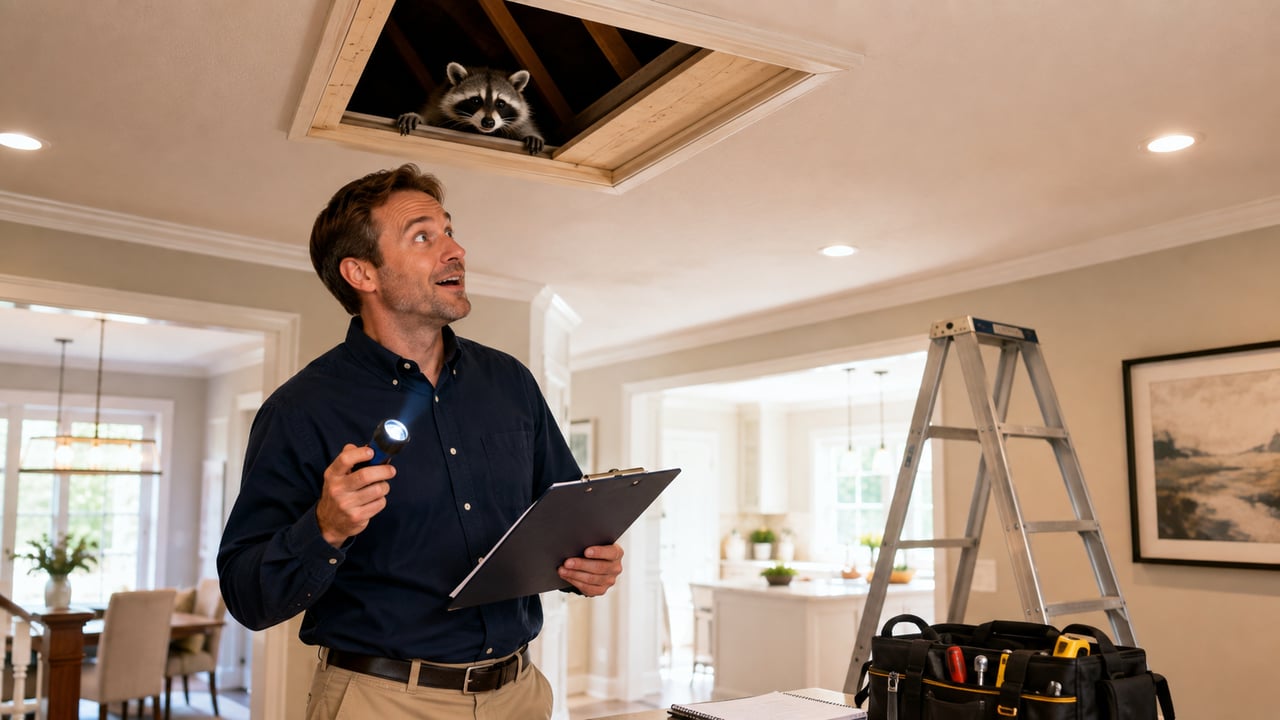
A home inspection has an impressive ability to turn a perfectly pleasant house into a 47-page document containing phrases like “evidence of moisture intrusion” and “recommend further evaluation.” For buyers, the report can be intimidating. For sellers, it can feel mildly insulting. And for home inspectors? Apparently, it can occasionally involve wildlife.
The important thing to remember is that a home inspection is not a pass-or-fail test. It is an evaluation of the home’s visible structure and systems at that point in time. Inspectors typically look at things such as the roof, foundation, electrical, plumbing, HVAC, walls, ceilings, floors, windows and doors.
Buyers: Do Not Panic at the Page Count
Inspection reports can be long because inspectors document a lot—including relatively minor safety and maintenance items. A loose handrail may appear in the same report as a roof concern, but those two things obviously do not deserve the same level of panic.
The goal is to separate:
“We should fix that eventually”
from
“We should probably understand this before the due diligence period ends.”
Pay particular attention to structural concerns, water intrusion, roofing, electrical, plumbing and major mechanical systems. If the inspector recommends further evaluation by a specialist, there is usually a reason for it.
And in North Carolina, timing matters. The due diligence period is your opportunity to investigate the property, request repairs and decide whether you are comfortable moving forward. Sellers are allowed to say no to repair requests, so the inspection is primarily about giving you information to make a decision.
Sellers: Your House Is About to Be Critiqued
Try not to take it personally. Your home may have sheltered your family beautifully for 20 years, but the inspector is still going to mention the loose toilet, missing GFCI protection and that one window that requires the strength of Thor to open. Before listing, taking care of obvious maintenance items can keep small issues from creating unnecessary noise later. Some sellers even choose to have a pre-listing inspection so they can discover problems before a buyer does. It can be helpful—but buyers should still generally obtain their own independent inspection. And please: make the attic, crawlspace, electrical panel and mechanical systems accessible. An inspector cannot inspect what they cannot reach.
And Then There Are the Inspection Reports You Never Forget
This is where things get entertaining. Professional inspectors have reported finding scissors lodged in electrical equipment, mysterious piles of leaves in attics and all kinds of questionable homeowner “repairs.”
Wildlife apparently likes real estate too. Inspectors have encountered birds nesting in chimneys and snakes hiding in crawlspaces—which seems like a very reasonable argument for allowing the professional to enter the crawlspace first. Inspector photo collections have also documented mice making themselves comfortable around electrical components.
Suddenly that dripping faucet does not seem so dramatic.
The Inspection Is Information, Not a Horror Movie
Most inspection reports are not going to reveal a snake convention in the crawlspace. They are going to reveal normal homeowner things: aging components, maintenance needs, repairs, safety concerns and sometimes issues that deserve further investigation. For buyers, the inspection helps you understand what you are purchasing. For sellers, it is a reminder that the little repair you stopped noticing three years ago may receive its own photograph and paragraph. And for everyone involved, it is much better to discover the surprise before closing than while moving the sofa in. Because nobody wants their first night in a new home to include the sentence:
“Was that snake on the inspection report?”