New construction gets plenty of attention. Fresh finishes, brand-new systems, and that unmistakable “no one has lived here before” feeling all have their appeal. But there is another kind of home that offers something entirely different — and increasingly rare.
A home with history. Not just age. History.
The kind of home with mature trees outside, architectural details you do not see every day, rooms that have evolved over time, and a neighborhood that already has a sense of identity. Those are things that cannot be rushed. They have to be earned over decades.
Character Is Hard to Recreate
One of the biggest draws of an older home is the detail. Original hardwood floors, substantial trim, brickwork, built-ins, fireplaces, screened porches, thoughtful proportions, and architectural touches that were part of the house from the beginning rather than added later for effect.
These are not just design choices. They are part of the home’s personality. And while new construction can certainly be beautiful, there is a difference between selecting character and inheriting it. Some homes simply have a presence when you walk through the door. That is hard to manufacture.
Established Neighborhoods Have Their Own Value
One of the things historic neighborhoods offer that simply cannot be created overnight is a true sense of place. Across the Triangle, some of the area’s best-known historic districts have been shaped over generations, giving them the mature landscapes, distinctive architecture, and personality that make them instantly recognizable.
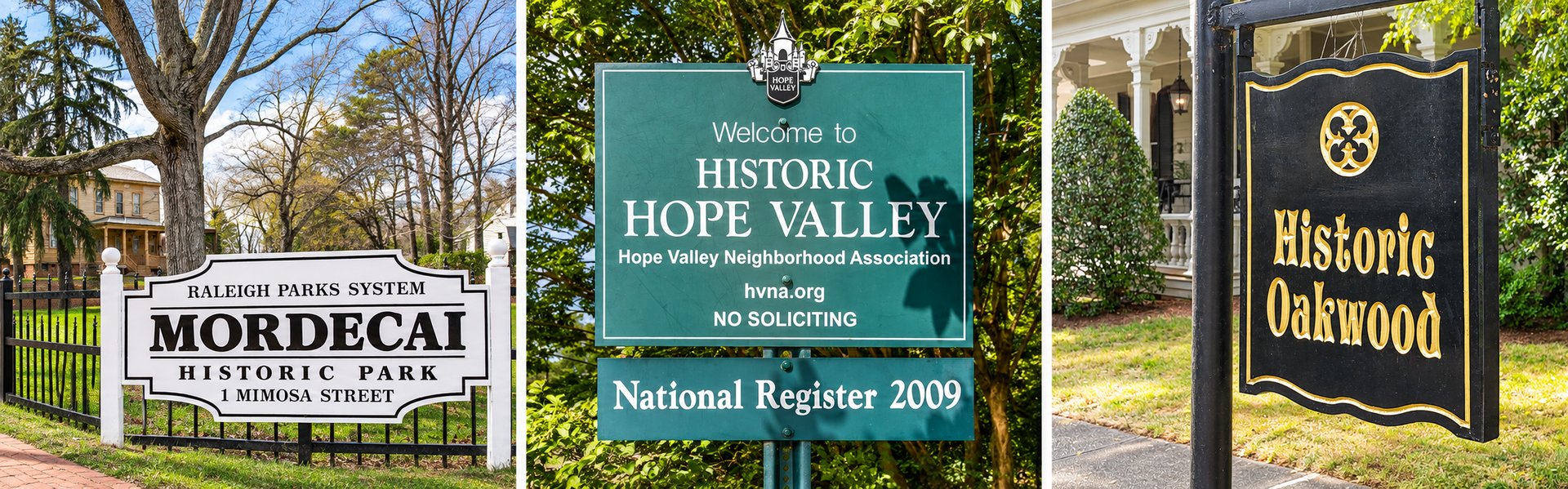
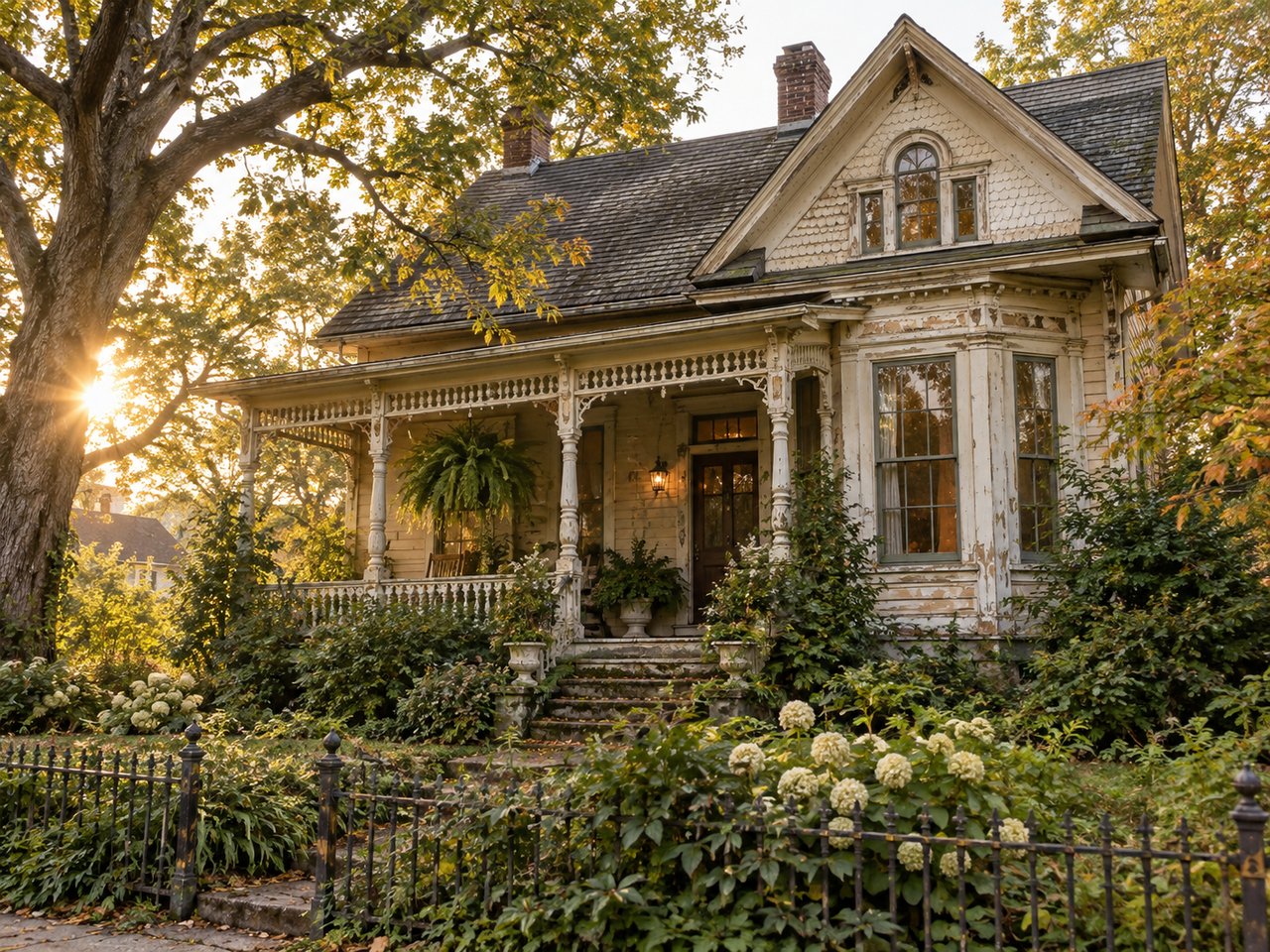
In Raleigh, Historic Oakwood developed largely from the late 19th into the early 20th century and is known for its collection of Victorian-era homes along with a wide mix of architectural styles. Mordecai Place developed primarily during the early decades of the 20th century and includes Colonial Revival homes, Craftsman bungalows, Tudor Revival designs, Cape Cods, and other styles that reflect different periods of Raleigh’s growth.
Durham’s Hope Valley Historic District offers another version of that story.
Hope Valley began taking shape in the 1920s, and the nearby Hope Valley Country Club became an important part of the area’s early history. Its Donald Ross-designed golf course helped establish the character of the area and remains one of Hope Valley’s most recognizable historical connections. Over the decades, homes from different eras and architectural styles filled in around the winding roads and mature landscape, creating the established character Hope Valley is known for today.
That is one of the qualities historic districts share, even when the neighborhoods themselves look completely different. Oakwood has its Victorian architecture. Mordecai has its eclectic early-20th-century mix. Hope Valley has its gracious homes, wooded lots, and architecture spanning multiple decades.
None of that happened overnight. And that is exactly the point.
The Architecture Tells a Different Story
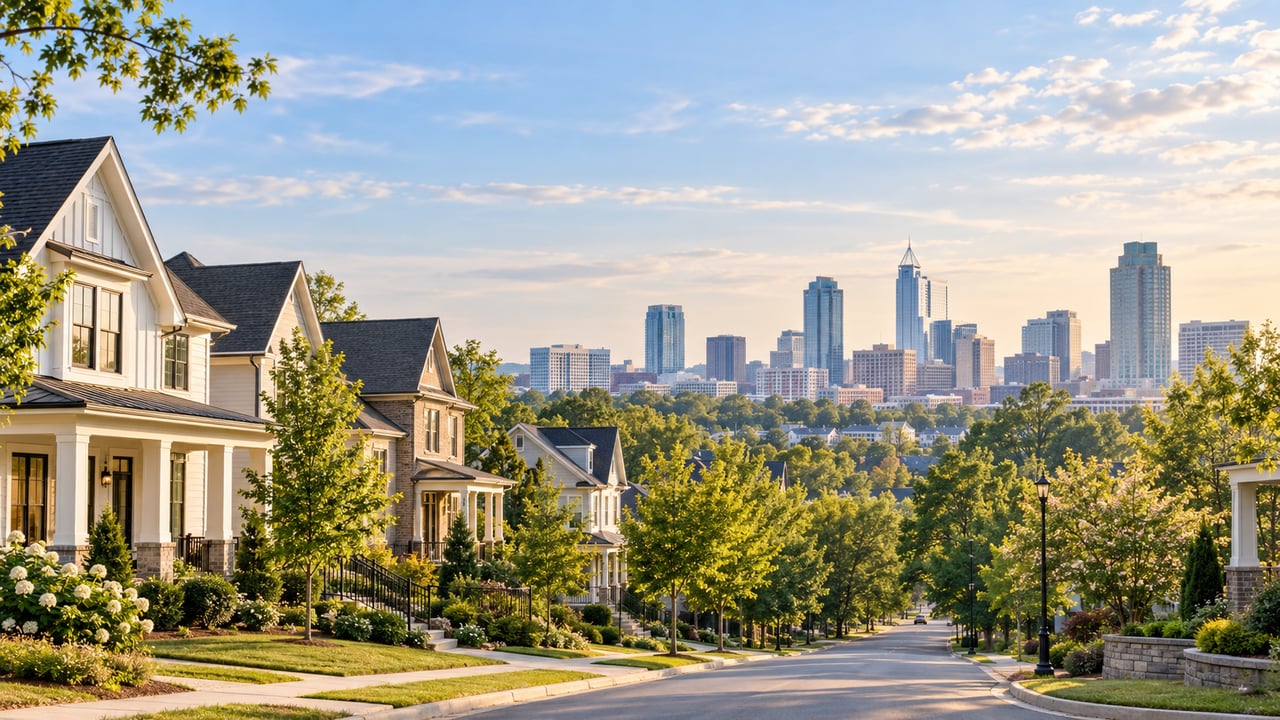
One of the clearest differences between many historic homes and newer construction is in the architecture itself. New homes are often designed around consistency, efficiency, and modern living patterns. Historic homes, on the other hand, tend to reveal their personality through details that were common to their era but are much less common to see today.
Historic homes often feature original hardwood floors, substantial trim and millwork, built-ins, fireplaces, brickwork, screened porches, dormers, and more defined rooms. The proportions, materials, and craftsmanship can make each home feel distinctly its own, with architectural details that have developed character over decades rather than being chosen all at once.
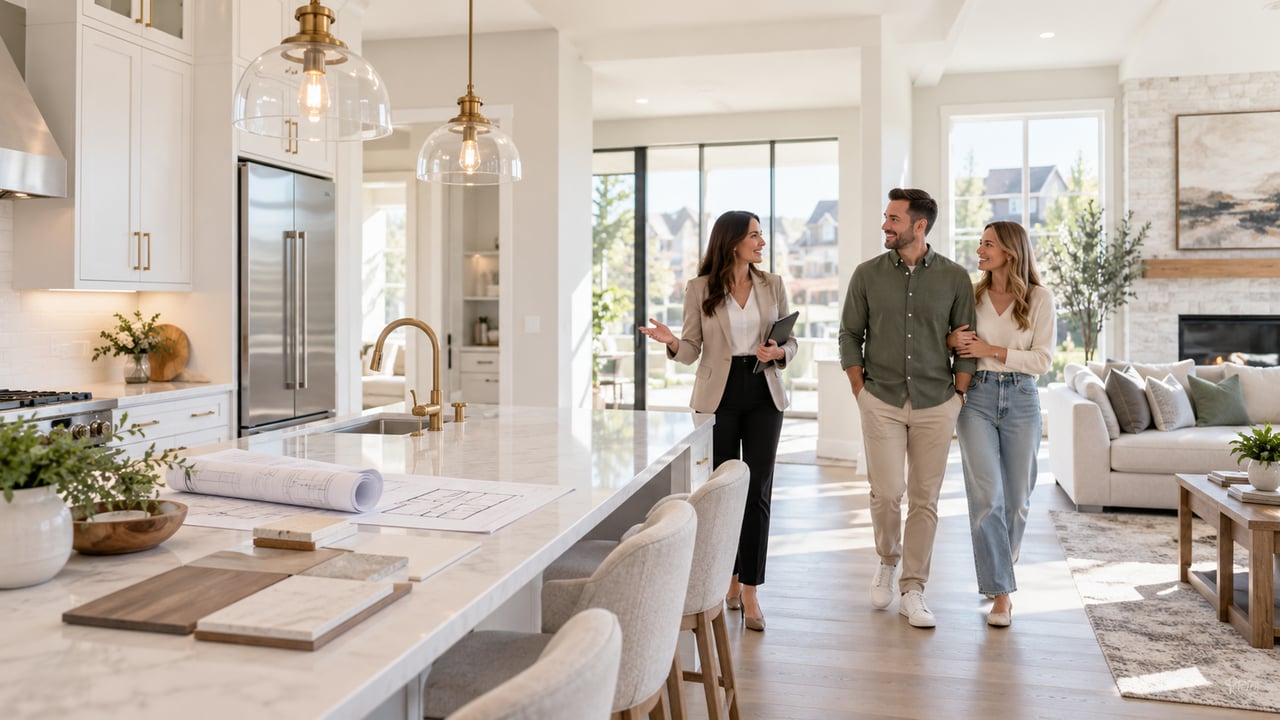
New construction generally reflects the way buyers live today, with open floor plans, larger kitchens, higher ceilings, expansive primary suites, and a cleaner, more streamlined aesthetic. Those features offer convenience and flexibility, but the overall design approach is different. Where new construction often emphasizes openness and continuity, historic homes tend to offer more architectural layering, individuality, and details that give each space its own identity.
When Historic Character Meets Modern Living
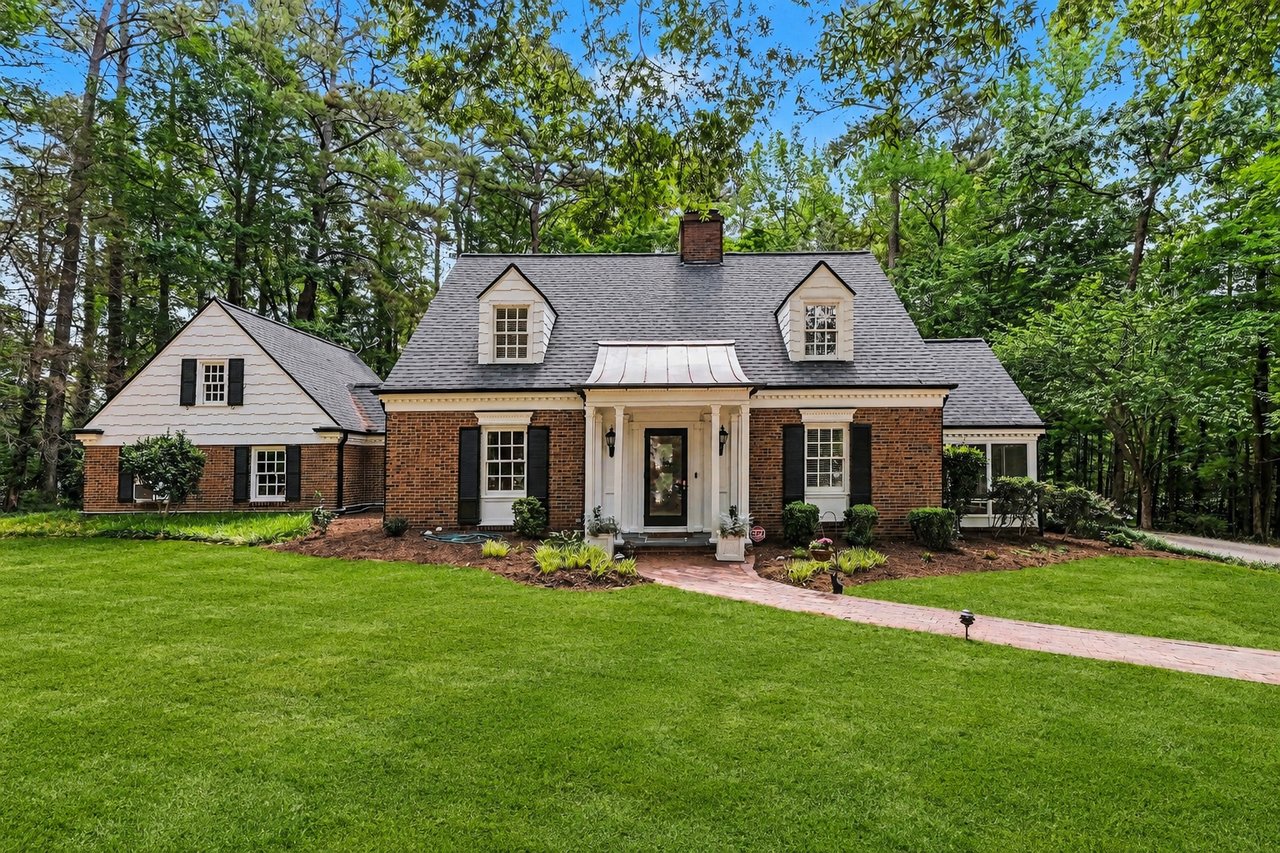
A good example of that balance can be found in Durham’s Hope Valley Historic District, where homes from different eras reflect the architectural character that has developed there over time. At 3725 Hope Valley Road, many of the qualities associated with an older home are still part of the experience — from the hardwood floors and traditional detailing to the screened porch and established setting — while updated spaces show how a historic home can continue to evolve for modern living.
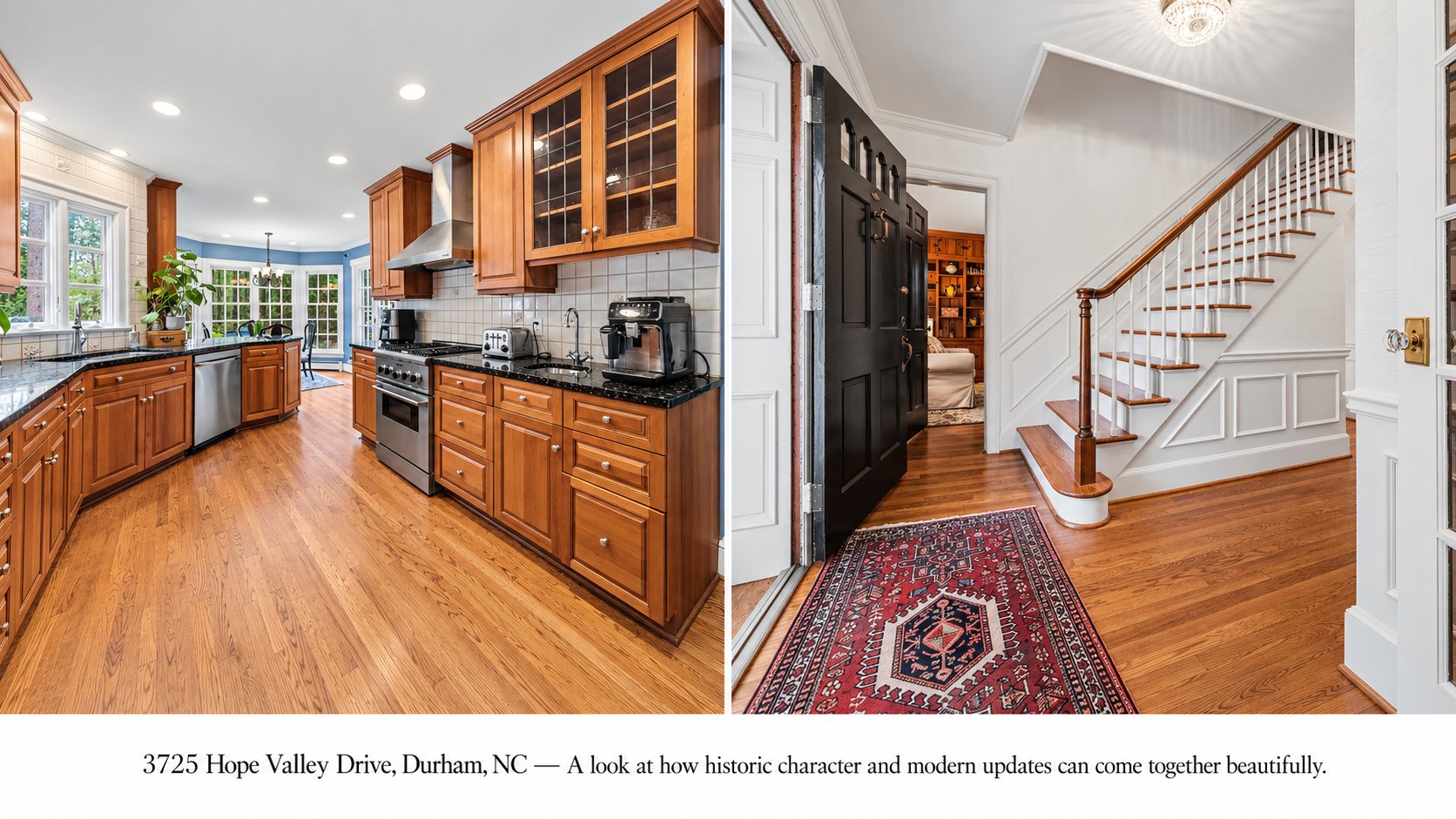
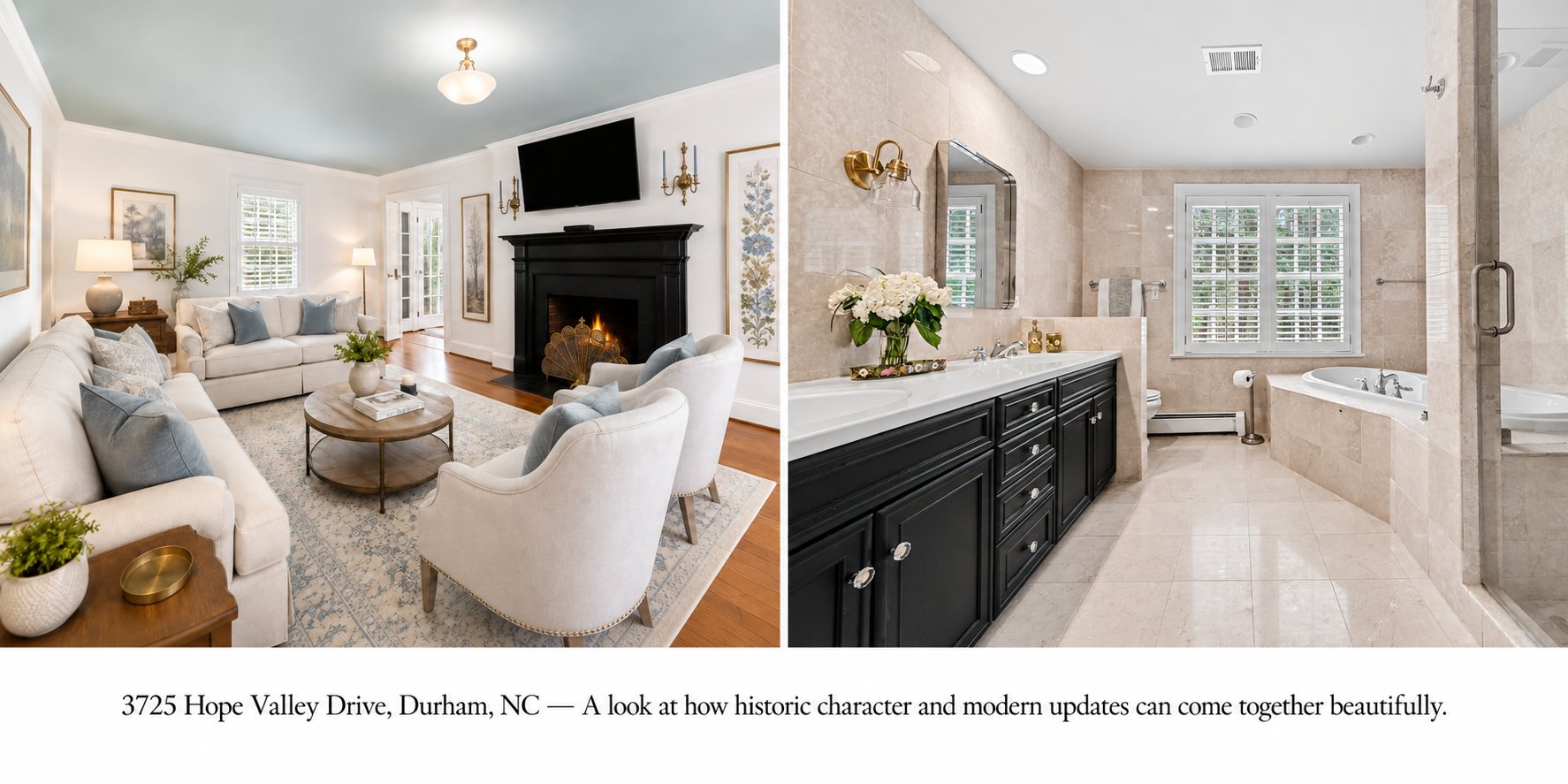
And that may be one of the most appealing things about a well-cared-for older home. The goal is not necessarily to preserve every room exactly as it looked decades ago. It is to keep the elements that give the home its identity while allowing other spaces to change with the way people live today.
A renovated kitchen can sit comfortably alongside original hardwood floors. An updated bathroom does not take away from traditional architectural details elsewhere in the home. Modern systems and conveniences can work quietly in the background while the craftsmanship and character remain front and center.
That combination offers something unique: the details you cannot easily recreate paired with the conveniences you do not want to live without.
Some Things Simply Take Time
There are plenty of beautiful homes being built today. But there are certain things no builder can deliver on closing day. A mature canopy of trees. Decades of architectural history. A neighborhood with an established identity. Original craftsmanship. A home that feels as though it belongs exactly where it is.
Those things take time. And for buyers who value character, architecture, and a sense of place, that history is not something to work around. It may be exactly what makes the home worth discovering. If you’re looking for the opportunity to own a piece of Hope Valley history, 3725 Hope Valley Drive is currently for sale. To see the home in person and experience the character, craftsmanship, and setting for yourself, give me a call to schedule a private tour.